Corn • Soybeans • Wheat
Grain markets have been choppy through late May as traders balance strong old-crop demand, improving planting progress, volatile outside markets, and uncertainty around global trade headlines. Corn has pulled back toward the lower end of its recent range, soybeans continue to show relative strength, and wheat has backed off sharply from its mid-May rally highs. Current futures remain sensitive to weather forecasts, export demand, energy prices, and any confirmed changes in Chinese buying interest.
Corn
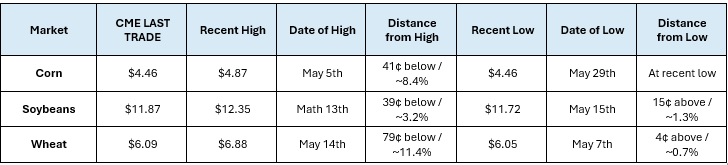
Corn futures have slipped back toward the low end of the recent range despite supportive demand signals. Export inspections were strong in late May, with one report noting corn inspections at 62.3 million bushels for the week ending May 21, up 13% from the prior week, while USDA also confirmed a Mexico corn sale tied to both current and next marketing-year delivery. However, the market has been weighed down by technical selling, uncertainty around U.S.–China trade commitments, and improving crop prospects as planting moves forward. USDA’s May outlook projected the 2026/27 U.S. corn crop near 16.0 billion bushels, down from last year, with ending stocks expected to decline but still remain adequate.
Farmer takeaway: Corn is near recent lows, so rallies may be worth rewarding with incremental sales, especially for old crop or if basis is attractive.
Soybeans
Soybeans have been the relative leader in the grain complex, holding near the upper end of the recent trading range. The market is being supported by stronger soybean oil values, solid crush expectations, and USDA’s projection for lower U.S. soybean ending stocks despite a larger 2026 crop. USDA projected 2026/27 soybean production at 4.435 billion bushels, while crush was forecast at a record 2.750 billion bushels, helped by demand for soybean oil as a biofuel feedstock. Globally, traders continue to watch China demand and South American export pace, with Brazil’s crop expected to remain a major competitive force.
Farmer takeaway: Soybeans are still within striking distance of recent highs. This may be a good market to review new-crop targets and consider scaling in offers above the market.
Wheat
Wheat has been volatile, rallying sharply in mid-May before giving back a sizable portion of the move. USDA’s May report pointed to a tighter U.S. wheat situation, with all-wheat production projected at 1.561 billion bushels, down sharply from last year, and weather issues in the Plains reducing winter wheat potential. Even so, wheat futures have pulled back from recent highs as traders questioned whether trade-related demand would materialize and as broader commodity selling pressured prices.
Farmer takeaway: Wheat is still well above its recent low but has lost momentum from the mid-May rally. Watch harvest pressure, protein premiums, and basis opportunities closely.
What We’re Watching Next
· Weather: June forecasts will become increasingly important for corn pollination setup, soybean planting/early growth, and final wheat yield potential.
· Exports: Corn demand has been encouraging, but soybean and wheat markets need confirmation of sustained buying interest.
· China/trade headlines: Markets have reacted quickly to talk of expanded ag purchases, but uncertainty remains over the size and timing of actual commitments.
· Outside markets: Crude oil and fertilizer-related headlines continue to influence grain sentiment through ethanol, biodiesel, and input-cost expectations.
Marketing thought: With volatility elevated, consider scaling up sales to reward rallies, know your break-evens, and keep offers working so targets are hit when futures or basis opportunities appear.
